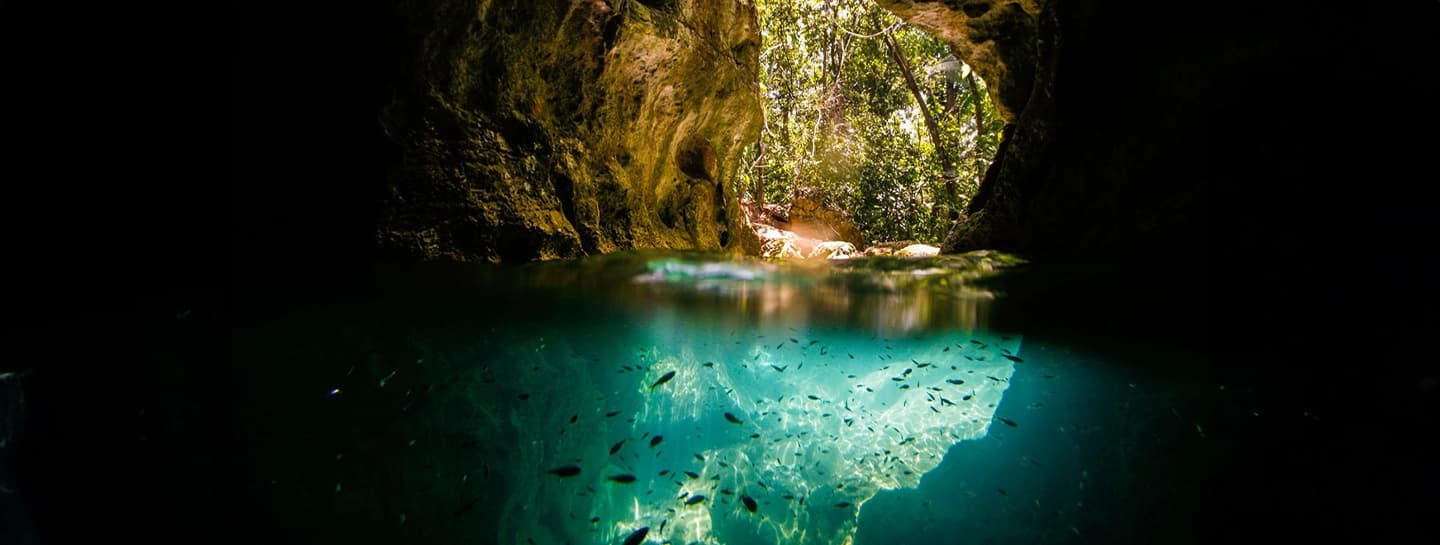
Barton Creek Cave — Canoe Into Absolute Stillness
No hiking. No swimming. Just a canoe, a headlamp, and a kilometre of ancient river cave where Maya rituals were performed and time appears to have stopped.
Silence, Stone, and Ceremony
There is a moment, about five minutes into the Barton Creek Cave canoe, when the entrance light disappears behind a river bend and the cave deepens around you. The ceiling rises to 80 feet of limestone, the river narrows to the width of two canoes, and the only sounds are paddle strokes and water drips. That moment of acoustic and visual silence is something people consistently describe as unlike anything else they experienced in Belize.
The Maya used Barton Creek Cave as a ceremonial site during the Late Classic Period. Three skeletal remains are visible from the canoe — positioned on natural limestone ledges high above the waterline, placed there intentionally by priests as offerings to the underworld deity Chaac. Pottery shards are distributed throughout the cave floor, some in association with the burials. Unlike ATM Cave, where artifacts are walked among, here they are observed from the water — a different kind of witnessing.
Through Mennonite Country
The drive to Barton Creek Cave takes you through one of Belize's most unusual cultural landscapes — the farming settlement of the Old Order Mennonite community of Barton Creek. These descendants of Dutch-Prussian Anabaptist settlers who came to Belize from Mexico in the 1960s continue to live by their founding principles: no electricity, no motor vehicles, and no connection to the commercial world outside their community.
The road through the settlement — flat, open farmland between the jungle ridges — is lined with horse-drawn farming equipment and wooden farmhouses. Men in straw hats drive buggies; women in printed dresses hang laundry in the morning light. The contrast between this scene and the ancient Maya cave that awaits 10 minutes further is one of those Belize juxtapositions that sticks with you long after the trip ends.
1 km guided route — 7 km total system length
Two guests per canoe, guide leads in separate canoe
Near-silent, dark, and dramatically serene
What's Included
- ✓Private transport from San Ignacio — return
- ✓Scenic drive through Old Order Mennonite farmland
- ✓Cave entry permit and reserve fee
- ✓Canoe (2 guests per canoe), helmet and headlamp
- ✓Licensed cave canoe guide throughout
- ✓Cultural briefing on Mennonite community history
- ✓Traditional Belizean lunch and water
Tour At a Glance
Perfect Pairing
Barton Creek + Xunantunich makes an ideal full-day combination — culture, cave, and a pyramid summit all before sunset.
Barton Creek Cave — Real Questions, Honest Answers
How far into Barton Creek Cave do you actually go?+
The cave stretches over 7 kilometres underground, but the guided canoe tour covers the first kilometre — roughly a 30–40 minute paddle in each direction. This kilometre contains the cave's most dramatic chamber formations, the highest accessible stalactite ceiling sections, and all the visible Maya archaeological deposits including three visible skeletal remains on natural ledge shelves. The deeper sections require advanced caving equipment and are not part of any public tour. What you access is the complete "visitor zone" — nothing significant is held back.
What makes Barton Creek Cave different from ATM Cave — which should I choose?+
They are genuinely different experiences and many visitors do both. ATM Cave is active, physical, and archaeologically rich — swimming, hiking, ladders, and an overwhelming density of artifacts. Barton Creek is contemplative, serene, and accessible — you paddle at your own pace in near-silence, with the cave's formations reflecting in the still water. If you have one day and want maximum adventure and archaeology: ATM. If you have limited mobility, are travelling with young children, or simply want a more meditative cave experience: Barton Creek. If you have two days: do both in any order.
What is the Old Order Mennonite community of Barton Creek?+
The road to Barton Creek Cave passes through a settlement of Old Order (also called "Horse and Buggy") Mennonites — one of Belize's most traditional religious communities. These Belizean Mennonites migrated from Mexico in the 1960s and live without electricity, internal combustion engines, or modern media. They farm using horse-drawn equipment and travel by horse and buggy. The community is entirely self-sufficient and produces much of Belize's dairy, vegetables, and citrus. Our guide explains their history and culture respectfully — we do not stop the vehicle or photograph community members without consent.